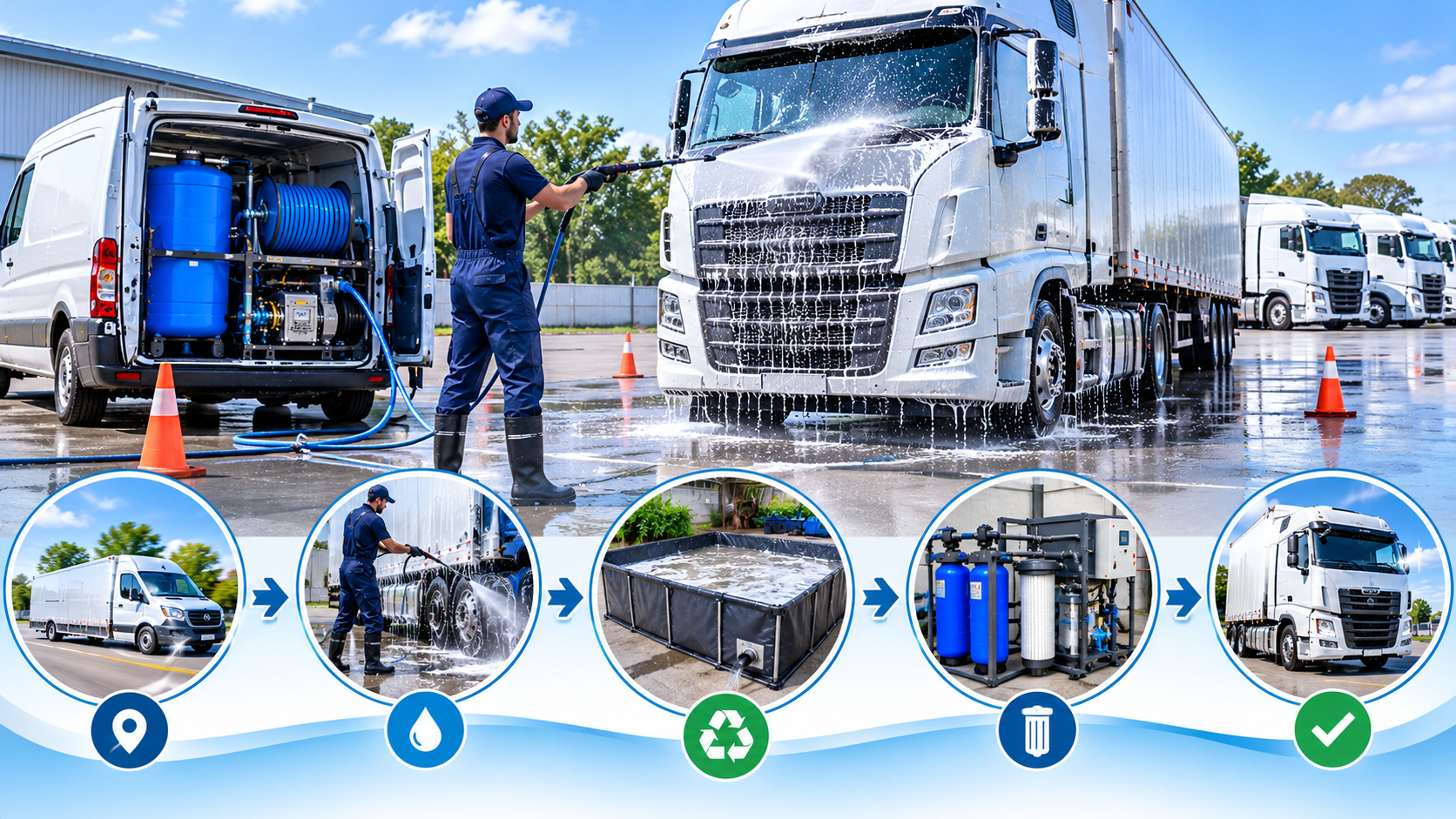
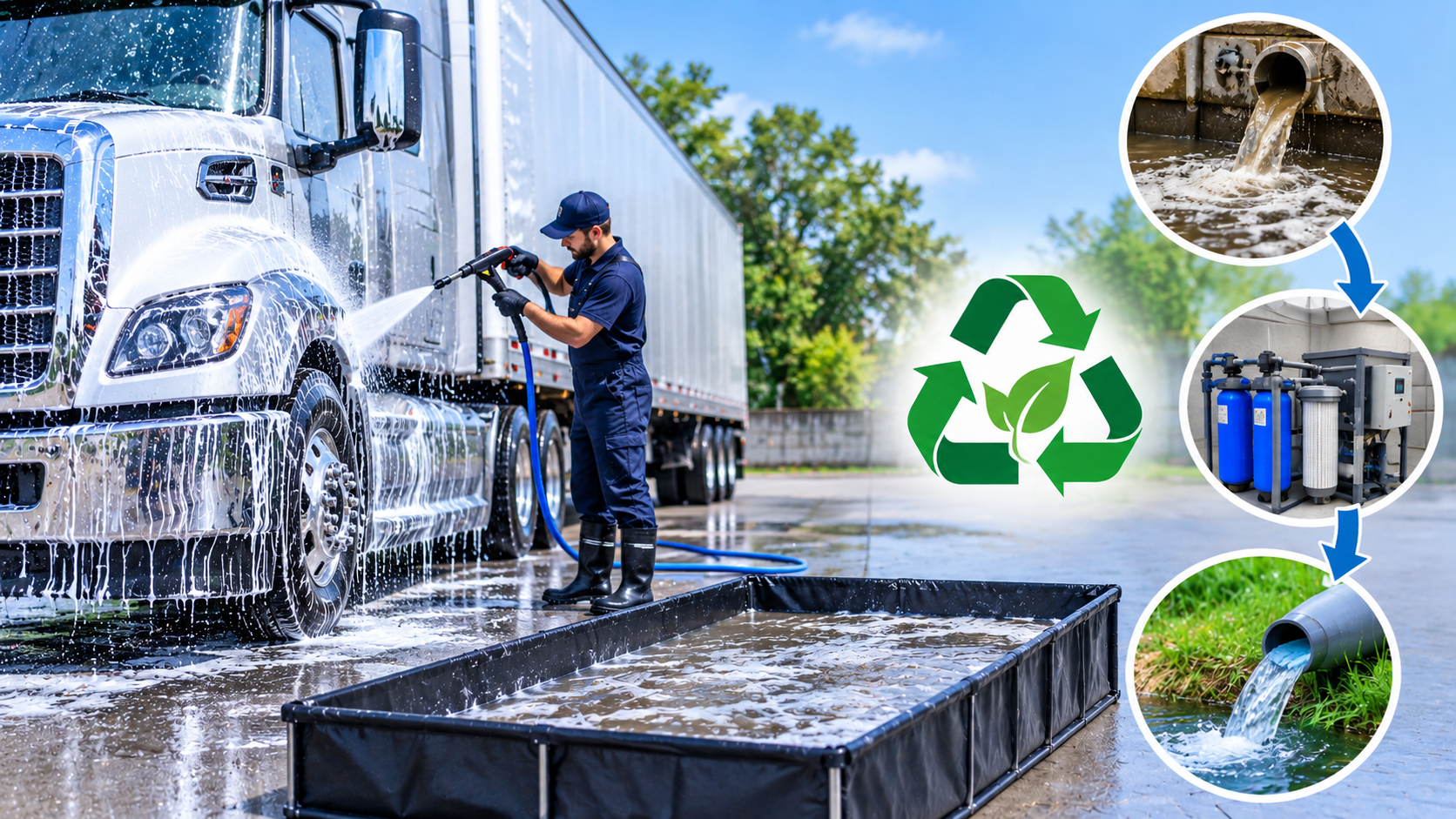
Managing commercial vehicle fleet washing requires capturing, treating, and properly disposing of runoff containing traffic film, heavy metals, oils, and detergents. Depots must isolate wash bays, route wastewater through oil-water separators or reclamation systems, prevent storm drain discharge, and comply with environmental discharge regulations.
Partnering with certified fleet washing solutions specialists or installing licensed containment infrastructure ensures legal compliance, protects surrounding ecosystems, and reduces freshwater consumption across daily fleet operations.
In this guide, you will discover environmental regulations, containment practices, treatment systems, water recycling strategies, and operational protocols for managing commercial fleet wash water efficiently and sustainably.
Understanding The Risks Of Vehicle Wash Wastewater
Every time commercial vehicles travel across highways, they collect road grime, soot, fuel residues, heavy brake dust, and chemical de-icers. When washed, this toxic mixture melts off the vehicle body and chassis.
If this wastewater flows uncontrolled across a depot yard, it enters local storm water drains. Unlike sanitary sewer systems, storm drains discharge directly into nearby rivers, streams, and groundwater reserves without treatment.
Core Best Management Practices (BMPs) For Fleet Depots
Managing wash water effectively relies on practical, preventive steps rather than reactive fixes. Commercial vehicle washing managers should implement 7 practices:
1. Designate Specific Wash Areas
Never allow drivers or cleaning staff to wash vehicles in open parking bays or near storm drains. Establish a dedicated, paved wash pad angled inward to direct water toward a designated catch basin.
2. Isolate Storm Drains
Temporarily seal or bind nearby storm drains during washing operations using magnetic drain covers or rubber mats.
3. Use Eco-Friendly Detergents
Switch exclusively to biodegradable, phosphate-free, and solvent-free traffic film removers (TFR). Avoid cleaners containing aromatic hydrocarbons or chlorinated compounds.
4. Implement High-Pressure, Low-Volume Equipment
Pressure washers drastically reduce total water volume while delivering superior cleaning performance compared to standard high-flow hoses.
5. Perform Regular Equipment Audits
Check valves, hoses, seals, and spray nozzles routinely. Damaged nozzles increase water consumption and compromise wash quality.
6. Train Operating Personnel
Ensure every staff member understands wastewater containment, spill kit deployment, and emergency reporting protocols.
7. Maintain Digital Compliance Records
Keep up-to-date service logs, waste disposal transfer notes, and water testing reports for audit readiness.
Setting Up a Water Reclamation and Recycling System
For high-volume operations, commercial vehicle fleet washing consumes tens of thousands of gallons of water every month. Installing a closed-loop water reclamation system allows depots to capture, purify, and reuse wash water continuously through a 5-stage recycling flow:
Stage 1 – Wash Pad Sump Collection
Used wash water flows off the cleaning pad into a dedicated collection sump.
Stage 2 – Pre-Filter Screen Processing
The collected runoff passes through a heavy-duty stainless steel screen that catches debris, mud, and solid particles.
Stage 3 – Cyclonic Particle Separation
Water enters centrifugal separators where high-speed spinning forces fine suspended grime and grit out of the liquid.
Stage 4 – Continuous Aeration & Oil Separation
The water enters an oxygenation tank with 24/7 pumps that prevent bacteria growth and odour, while oil-water interceptors strip away floating fuel and grease.
Stage 5 – High-Pressure Re-Use
Purified water moves to high-pressure pumps that feed back directly into the pressure washers and automated wash arches.
How Mobile Fleetwash Solves Wash Water Challenges
Setting up fixed wash bays, interceptors, and recycling systems requires significant capital investment, planning permission, and ongoing maintenance. For many depot managers, an on-site mobile service offers a simpler, fully compliant alternative.
At Mobile Fleetwash, we bring over 50 years of industry experience directly to your yard. Operating a fleet of over 160 purpose-built mobile cleaning units across the UK, we clean more than 30,000 commercial vehicles every week for leading transport brands.
- Complete Wastewater Containment: If your site lacks approved drainage, our mobile teams capture wash water using specialized containment systems and remove it for Environment Agency-licensed disposal.
- ISO-Standard Detergents: We use non-caustic, solvent-free traffic film removers formulated to ISO 9001/9002 quality standards, delivering a deep clean while protecting vehicle paintwork and the environment.
- Flexible Operational Scheduling: Our mobile units operate around your fleet’s schedule mornings, evenings, or weekends, keeping your vehicles clean without operational downtime.
- Full Digital Auditing: Every visit is supported by digital job records, images, and waste transfer documentation to simplify your compliance management.
Outsourcing your professional fleet cleaning allows your business to maintain impeccable vehicle presentation while delegating all environmental and wash water compliance duties to licensed experts.
Streamline Your Fleet Cleaning Today With Us
Managing commercial vehicle wash water effectively protects local water sources, ensures regulatory compliance, and reinforces your company’s commitment to sustainability.
Whether you upgrade your depot’s drainage infrastructure, install closed-loop recycling equipment, or partner with a professional mobile wash provider, establishing controlled washing protocols is essential for modern fleet management.
Investing in clean operations safeguards both your environmental reputation and your balance sheet. Choosing a trusted partner for your fleet vehicle cleaning ensures your operations run smoothly every day.
Keep your commercial fleet looking spotless without the hassle of wash water compliance. Contact us today for nationwide, professional on-site fleet washing solutions around your depot’s schedule.
Frequently Asked Questions
1. How often should commercial fleet vehicles be washed?
Most commercial fleets wash vehicles weekly or fortnightly. Regular washing removes corrosive road grime, maintains a professional brand image, and makes routine safety inspections much easier.
2. What equipment is required to intercept wash water oils?
An oil-water separator or coalescing plate interceptor is required. These units trap free-floating hydrocarbons and oil film from wash water before the liquid enters the sanitary sewer system.
3. How does a closed-loop water recycling system work?
Closed-loop systems collect wash water in sumps, filter out sediment, separate oils, aerate the liquid to prevent bacteria, and pump clean water back into pressure washers for immediate reuse.
4. Can mobile fleet washing services manage wastewater containment on site?
Yes. Professional mobile washing teams use specialized containment bunds, mats, and vacuum extraction systems to capture dirty wash water on site and transport it to approved waste facilities.
5. What detergents should be used for eco-friendly fleet washing?
Depots should use non-caustic, solvent-free, and biodegradable traffic film removers (TFR). These formulas loosen heavy road grime effectively while remaining safe for wastewater treatment systems and vehicle bodywork.