Washing commercial vehicles at a depot or operating site saves time, but managing the wastewater produced during cleaning is just as important. Wash water can contain road grime, oil, grease, brake dust and cleaning chemicals that may harm the environment if they enter unsuitable drains or surrounding soil.
Proper wastewater management is therefore an essential part of mobile vehicle washing. Businesses need to ensure that wastewater is collected, stored and disposed of appropriately after cleaning. With suitable equipment and procedures in place, fleets can maintain clean vehicles while reducing the risk of uncontrolled runoff and environmental contamination.
What Makes Vehicle Wash Water Difficult to Manage?
Commercial vehicles travel through different environments, from motorways and urban roads to construction sites. As dirt builds up on their bodywork, wheels and chassis, washing transfers these contaminants into the water.
Common challenges include:
- Oil and grease: Road residues and vehicle grime can introduce oily contaminants into wash water.
- Road dirt and brake dust: Mud, fine particles and debris become mixed with the runoff.
- Cleaning products: Detergents and traffic film removers also need to be considered when managing wastewater.
- Drainage limitations: Some depots lack drainage suitable for regular commercial vehicle cleaning.
For businesses arranging on-site commercial vehicle washing, understanding these risks helps determine the appropriate wastewater management method before cleaning begins.
How Is Wastewater Collected During Mobile Vehicle Washing?
Wastewater management starts with controlling runoff. The appropriate method depends on the site’s drainage, washing area and discharge arrangements.
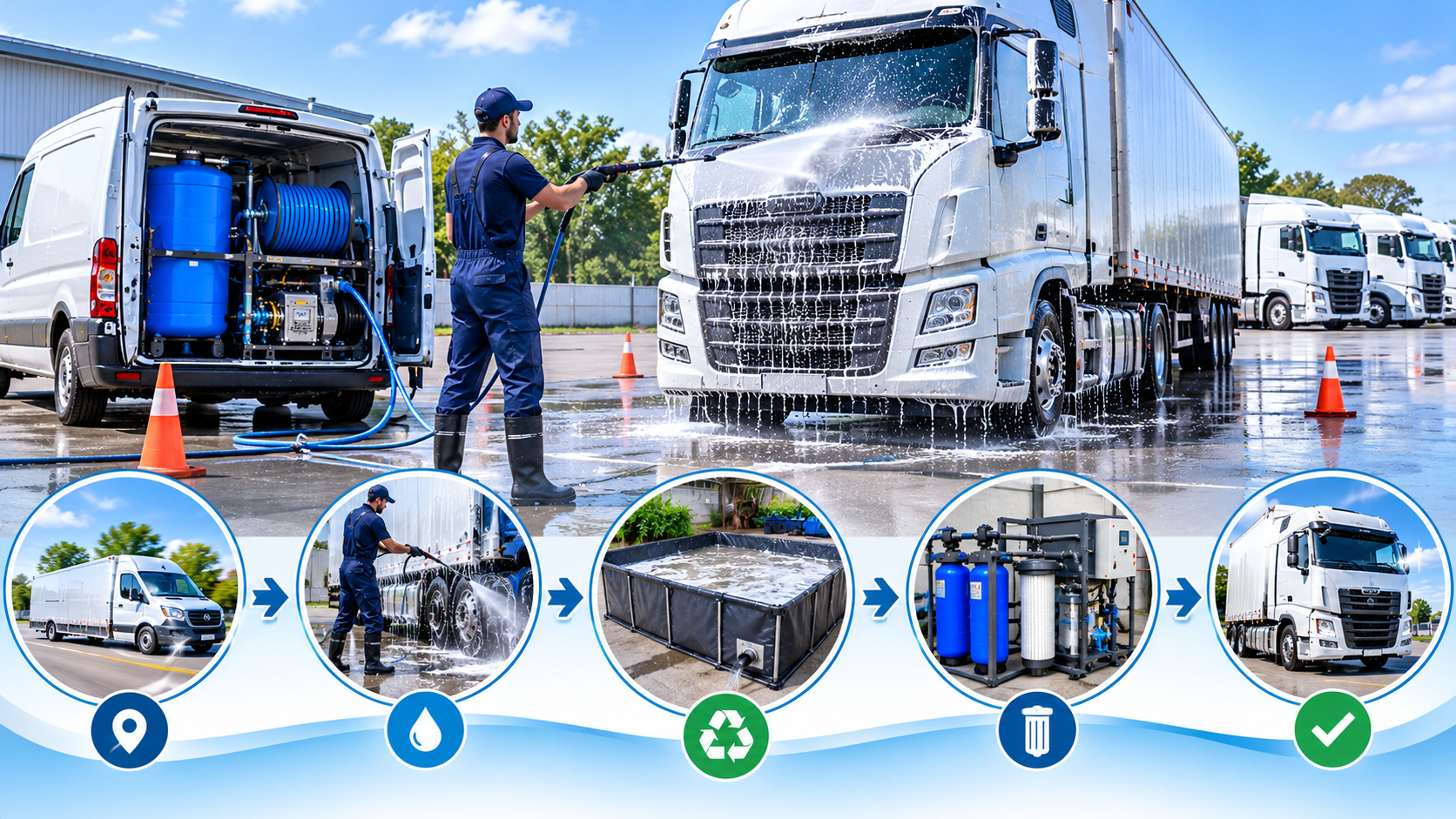
1. Assess the Washing Site
Before cleaning starts, check the available drainage, the layout of the washing area and any site restrictions. Surface water drains should not receive contaminated vehicle wash water. Discharge into a foul or combined sewer may require permission from the relevant water company.
This assessment helps establish whether existing facilities are suitable or whether dedicated wastewater containment is needed.
2. Capture the Runoff
Where suitable drainage is unavailable, wastewater containment equipment can collect water produced during washing. The setup should prevent contaminated runoff from spreading across the yard or entering unsuitable drains.
This is particularly useful for businesses arranging fleet vehicle washing in UK depots where drainage facilities vary between locations.
3. Reclaim Water into Storage Tanks
Specialist pumps can transfer collected wash water into tanks fitted to mobile cleaning units. The wastewater remains contained while vehicles are cleaned, rather than being allowed to flow freely across the site.
This approach helps make commercial vehicle cleaning possible at operating locations with limited or unsuitable drainage.
4. Arrange Approved Disposal
Collected wastewater needs to be handled through an appropriate disposal route. Businesses should establish who is responsible for transporting and disposing of the waste and whether supporting documentation is available.
Mobile cleaning providers offering containment can incorporate these arrangements into the agreed service, helping fleet managers address wastewater requirements alongside regular cleaning.
Can Wastewater Be Recycled During Vehicle Washing?
Yes, but it really boils down to the gear and filtration setup you’re running. Certain mobile cleaning rigs come fitted with treatment systems that filter wash water on the spot, letting you reuse it across multiple vehicles. If you’re washing an entire fleet, this cuts down fresh water usage in a big way.
If you’re mapping out commercial vehicle washing in UK operations, putting a recycling system in place is definitely a smart move. Just keep in mind that you can’t assume all collected run-off is instantly good to go again. The quality of the wastewater and the strength of your filtration setup dictate whether it can actually be cleaned up effectively.
Some mobile setups are built just to capture and store dirty water for off-site disposal, while others go the extra mile with built-in filtration and recycling. Knowing what each rig can handle makes it much easier to pick an arrangement that matches your day-to-day washing demands.
What Should Businesses Check Before Arranging Fleet Washing?
A few practical checks can help prevent wastewater problems and keep regular cleaning organised.
- Check drainage: Identify where drains lead and confirm which discharge arrangements are permitted.
- Discuss site limitations: Inform the cleaning provider about access restrictions and unsuitable drainage.
- Confirm disposal arrangements: Establish how wastewater will be collected, transported and disposed of.
- Consider water efficiency: Ask whether filtration and recycling systems are available.
- Maintain records: Keep relevant waste documentation and service records where required.
These checks are especially useful when coordinating cleaning across several depots. When comparing commercial vehicle washing services, businesses should consider wastewater containment and disposal alongside cleaning quality and scheduling.
How Mobile Fleetwash Supports Responsible Wastewater Management
At Mobile Fleetwash, we provide on-site vehicle cleaning across the UK, with wastewater containment available where drainage is limited or unsuitable.
- Wastewater containment: We capture wash water during cleaning to help prevent it from entering unsuitable drainage or surrounding ground.
- Reclaim and storage: Our specialist pumps transfer collected wastewater into onboard tanks.
- Approved disposal: We transport collected wastewater away from the site for approved disposal.
- Water recycling: Many of our mobile units feature filtration systems that treat reclaimed water for reuse during subsequent washing cycles.
Our Environment Agency licence covers the transport and handling of waste associated with our vehicle cleaning operations. Supporting waste documentation is also available where required. With these options, we help businesses manage wastewater alongside their regular mobile fleet washing requirements. Contact us to discuss your vehicles, site drainage and cleaning schedule.
FAQs
1. Why is wastewater management important during mobile vehicle washing?
Wastewater management prevents contaminated water containing oil, grease, dirt and cleaning chemicals from entering unsuitable drains, soil or nearby watercourses.
2. How is wastewater collected during commercial vehicle washing?
It’s gathered up using heavy-duty containment mats or bunds and specialist pumps, which route the dirty water straight into holding tanks for safe handling and disposal.
3. Can wastewater from vehicle washing be reused?
Yes, as long as you have the right filtration setup in place and the cleaned-up water is cleared for the type of washing you’re doing.
4. Where should commercial vehicle wash water be disposed of?
Wash water needs to be hauled off to an approved treatment facility or drained through a legally authorized trade effluent route, keeping everything strictly above board.
5. Does Mobile Fleetwash provide wastewater containment services?
Yes, Mobile Fleetwash offers wastewater containment, collection, onboard storage and disposal arrangements to support vehicle cleaning at sites with limited drainage.