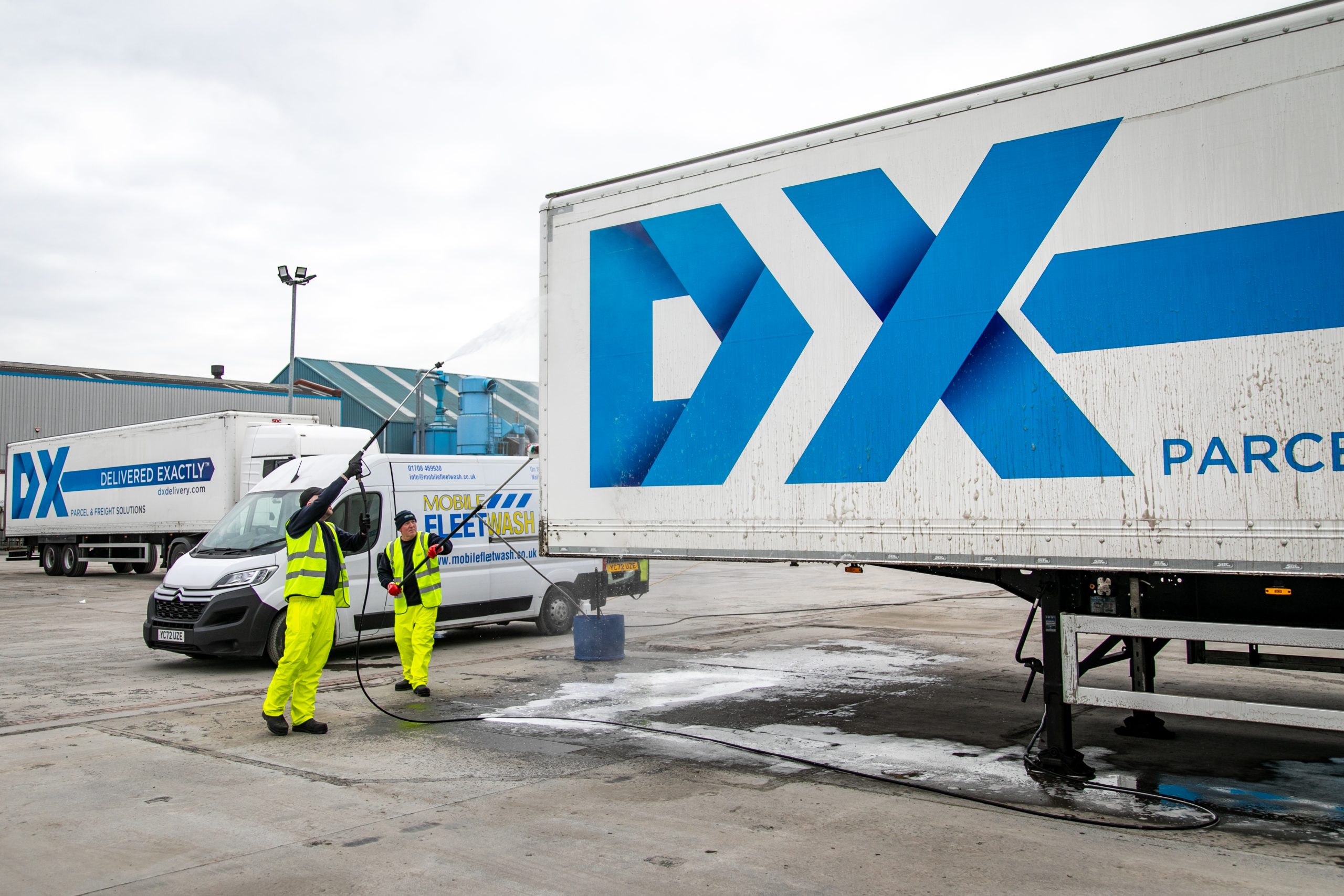
Mobile fleet washing is a vehicle cleaning service carried out at the place where your vehicles are normally based.
Instead of sending HGVs, vans or trailers to a fixed truck wash, a mobile cleaning team travels to your depot, yard or operating site and cleans the vehicles there.
The service is mainly used by businesses running multiple working vehicles, including transport, logistics, delivery, retail and waste operations. Cleaning can be arranged around when vehicles are back at the depot, with regular weekly, fortnightly or other agreed visits.
Mobile Fleetwash provides on-site cleaning across the UK for HGVs, trucks, trailers, vans, refuse collection vehicles and other specialist vehicles.
What Does Mobile Fleet Washing Include?
The exact service depends on the vehicles and what has been agreed for the site.
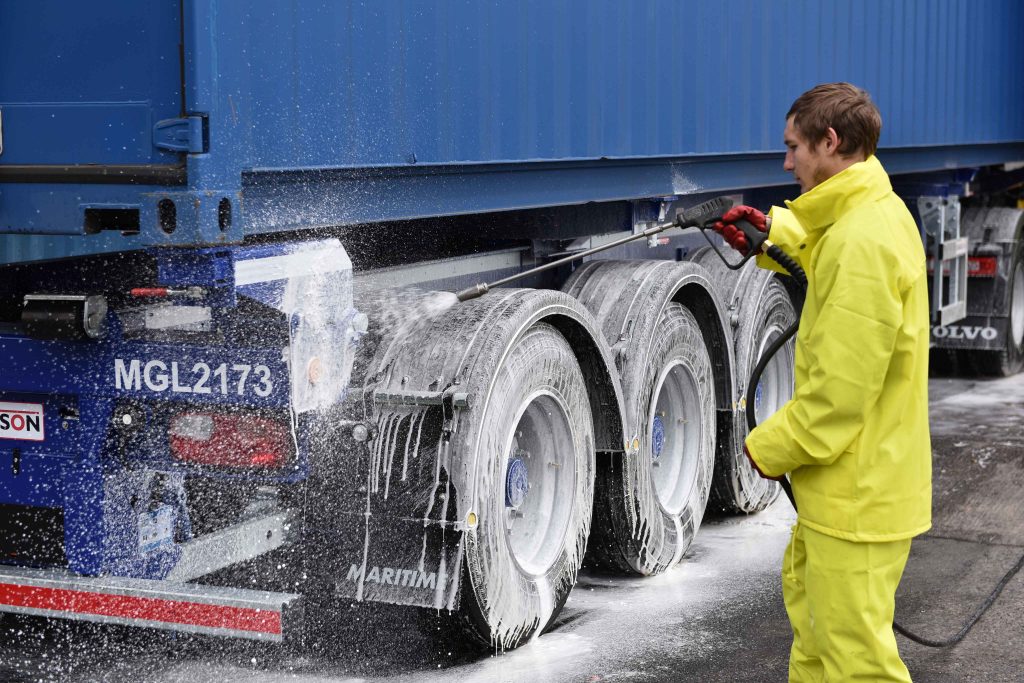
For regular exterior washing, the aim is to remove road film, dirt, salt and other surface build-up that vehicles pick up during normal use.
This can include areas such as:
- Cab and exterior bodywork
- Windows and mirrors
- Lights and number plates
- Wheels and wheel arches
- Cab backs
- Visible chassis areas
- Vehicle livery and graphics
Some sites also require additional work such as cab valeting, trailer washouts or more detailed cleaning for specialist vehicles.
Mobile Fleetwash cleans a wide range of vehicle types, including tractor units, trailers, rigid trucks, tankers, tippers, bulkers, refrigerated vehicles, delivery vans and refuse collection vehicles.
How Does Mobile Fleet Washing Work?
Most on-site cleaning arrangements start with a few basic details about the vehicles and the site.
The cleaning team needs to know what is being washed, roughly how many vehicles are involved, where they are based and when they are normally available.
Site access and drainage also need to be considered before regular visits begin.
Once these details have been agreed, cleaning can be scheduled around the normal working pattern of the depot.
1. The Vehicles and Site Are Agreed
Before the first visit, you will normally provide the site postcode, vehicle types, approximate numbers and the area where they are usually parked.
This helps establish what equipment is needed and how the clean will work at that location.
Any access restrictions or site-specific requirements can also be discussed at this stage.
For larger businesses, this can be done across several depots rather than treating every location separately.
2. A Cleaning Schedule Is Arranged
The next step is agreeing when the vehicles are most likely to be available.
For some operations, this might be early in the morning before vehicles leave the depot. For others, evenings or weekends work better once vehicles have returned.
Mobile Fleetwash can arrange morning, evening and weekend visits where required.
Regular cleaning can also be set up weekly, twice weekly, fortnightly or at another agreed frequency.
There is no set schedule that works for every fleet. Mileage, vehicle use and working conditions all affect how often cleaning is needed. You can read more about this in our guide to how often commercial vans and trucks should be washed.
3. The Mobile Cleaning Unit Arrives at the Depot
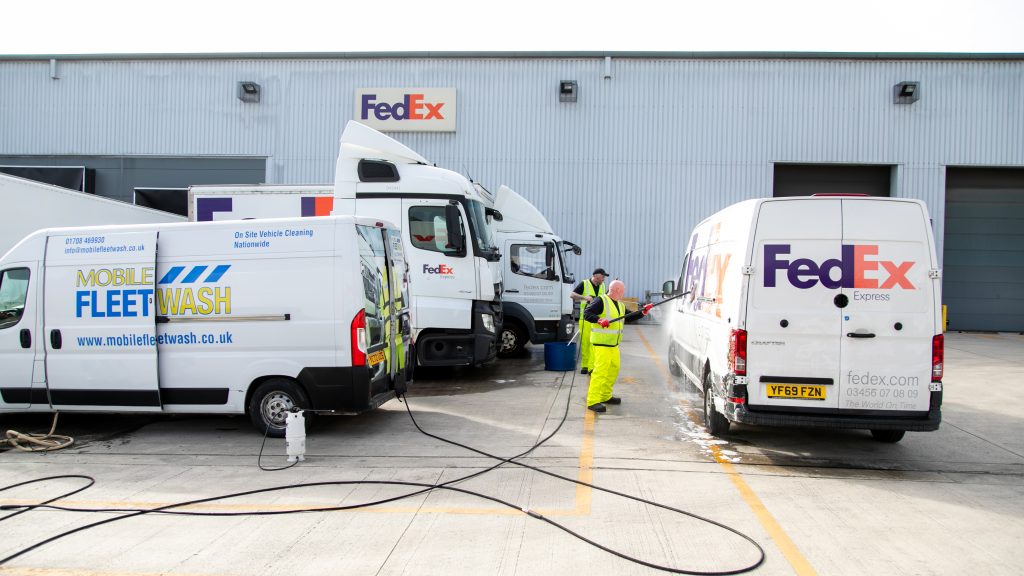
On the agreed day, the operator arrives at the site in a purpose-built mobile cleaning unit.
The vehicle list, wash area and any site requirements can then be confirmed before cleaning starts.
Mobile Fleetwash operates a nationwide network of more than 160 mobile cleaning units, allowing regular services to be arranged for individual depots as well as businesses with vehicles based across several locations.
The cleaning units carry the equipment used for the agreed wash, with spare equipment also carried to help keep regular visits running if something needs replacing.
What Happens During the Vehicle Wash?
The cleaning process can vary slightly depending on the type of vehicle and how dirty it is, but regular exterior cleaning follows a set process.
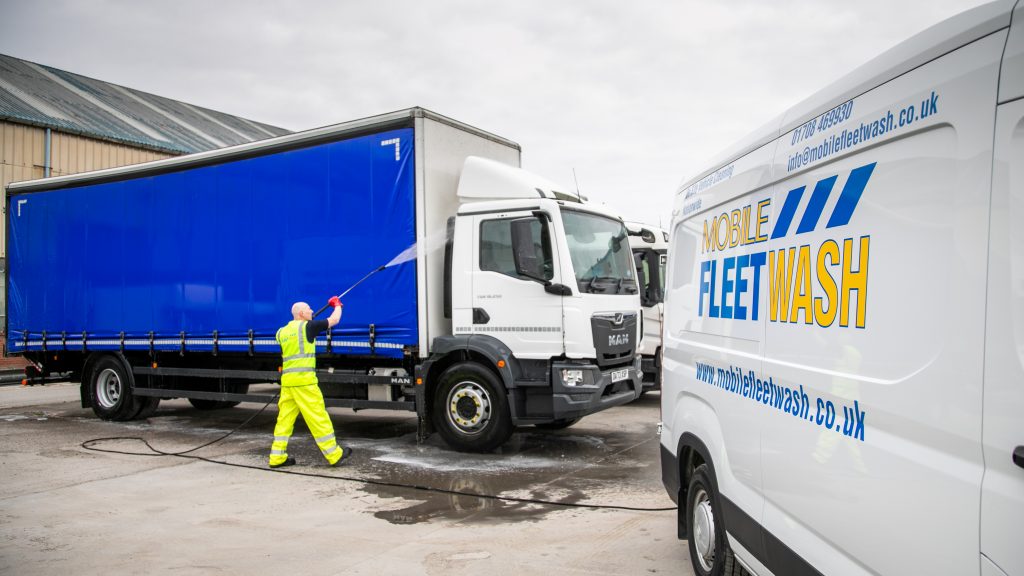
Vehicles are first pre-treated with traffic film remover. This helps loosen road film, dirt and other surface build-up before the main wash.
Flat surfaces and key areas can then be hand brushed where required. Attention is given to parts of the vehicle where dirt is more noticeable, such as windows, mirrors, lights and number plates.
The vehicle is then cleaned using high-pressure water, covering the bodywork, wheels, wheel arches and other accessible exterior areas.
A final check is carried out once the wash is complete, with supporting images recorded where required.
For mobile truck washing, the same approach can be used across tractor units, trailers, rigids and other HGV types.
For mobile van washing, the process can be used across delivery vans, courier vans, long-wheelbase vehicles and other working vans.
What Does a Depot Need for Mobile Fleet Washing?
The main requirement is a suitable area where the vehicles can be cleaned safely without causing unnecessary disruption to other site activity.
Vehicle positioning is important. The cleaning team needs enough room to work around each vehicle and access the areas included in the wash.
Site access also needs to be considered, particularly at busy transport depots where vehicles may be arriving, leaving or loading throughout the day.
Drainage is another key part of the setup.
Not every depot has drainage that is suitable for vehicle washing, so this should be checked before regular cleaning begins.
What Happens if the Site Does Not Have Suitable Drainage?
Vehicles can still be cleaned at many sites where suitable drainage is limited or unavailable.
Vehicle wash water can contain road dirt, grease, oils, brake dust and cleaning products. Environment Agency guidance says contaminated wash water should not be allowed to enter surface water drainage.
Where suitable drainage is not available, Mobile Fleetwash can provide wastewater containment.
Wash water can be collected during cleaning, reclaimed into onboard tanks and taken away for approved disposal.
Mobile Fleetwash is licensed by the Environment Agency for the transport and handling of waste linked to its vehicle cleaning operations. Site-specific waste documentation can also be provided where required.
Does Mobile Fleet Washing Have to Take Place During the Working Day?
No.
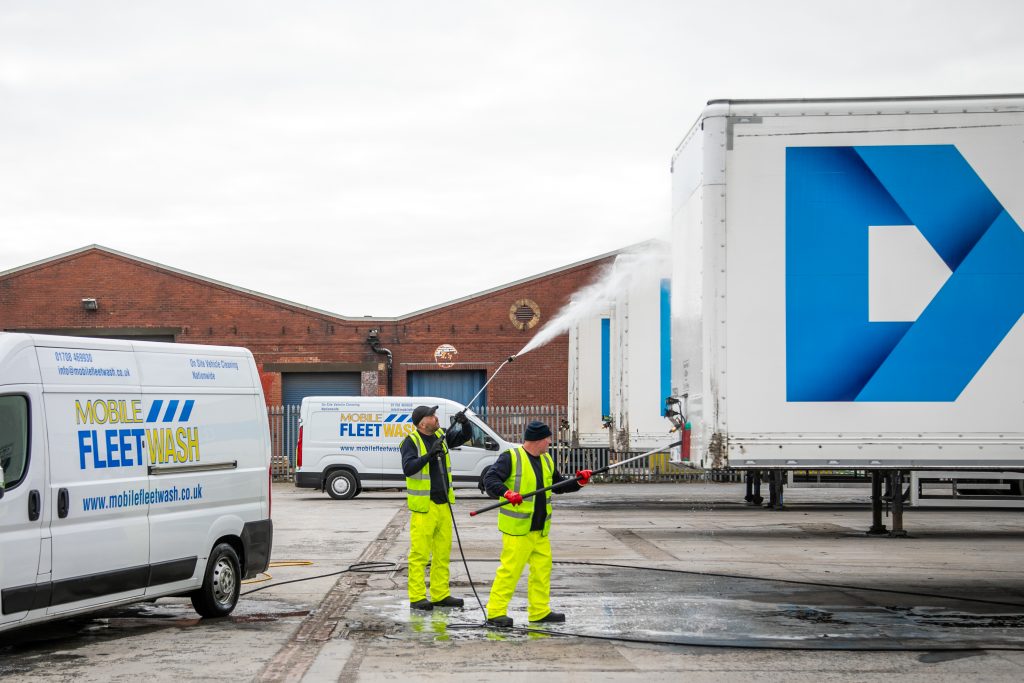
One of the main reasons businesses use on-site vehicle cleaning is that visits can be planned around when vehicles are actually at the depot.
For a delivery operation, most vans may be away during the day and return in the evening. A haulage business might have more vehicles available early in the morning or over the weekend.
Cleaning times can be agreed around these movements instead of taking vehicles away when they are needed for work.
This also means different depots can follow different schedules if their operating hours are not the same.
What Happens After the Vehicles Have Been Cleaned?
Mobile fleet washing does not have to end once the pressure washer is turned off. Mobile Fleetwash operators record completed work digitally while they are on site.
Job records can include the vehicles cleaned, service details and supporting images. Electronic job cards can also be issued after the work has been completed.
For larger operations, auditing and reporting can be provided to give fleet and transport managers a clearer view of the work taking place across different sites.
This is useful for businesses managing large vehicle numbers or several depots, where it would otherwise be difficult to keep track of each individual wash.
Can Mobile Fleet Washing Cover Several Depots?
Yes.
On-site vehicle cleaning can be arranged for one location or across a larger network of sites.
For businesses running vehicles across several depots, cleaning requirements can be agreed for each location. One site might need weekly truck cleaning, while another could run on a fortnightly schedule.
Timings can also be different at each depot depending on vehicle movements and site access.
Mobile Fleetwash supports national and multi-site operations through its UK-wide network, with regular cleaning programmes used across transport, logistics, delivery, retail and waste fleets.
How Often Can Mobile Fleet Cleaning Be Arranged?
There is no minimum frequency that suits every business.
Many operators use weekly or fortnightly cleaning, while higher-mileage fleets or vehicles working in dirtier conditions may need washing more often.
Mobile Fleetwash can arrange twice-weekly, weekly, fortnightly or other agreed schedules.
The best approach is to look at how quickly the vehicles become dirty and when enough of them are normally back at the depot to make the visit worthwhile.
The schedule can also change during the year. Winter road conditions, increased mileage or changes to the operation can all affect how often vehicles need cleaning.
Is Mobile Fleet Washing Only for Large Fleets?
No, although it is particularly useful for businesses that have several vehicles based at the same location.
The service can work for an individual depot with a smaller number of vans or trucks, as well as larger operations managing hundreds of vehicles across several sites.
The main consideration is whether on-site cleaning makes sense for the way the vehicles are used and where they are normally based.
For companies with a larger fleet, scheduled cleaning also makes it easier to keep a consistent routine rather than arranging individual washes vehicle by vehicle.
What Are the Main Differences Between Mobile Fleet Washing and a Fixed Truck Wash?
The biggest difference is where the cleaning takes place.
At a fixed truck wash, the vehicle has to travel to the wash site. With mobile fleet washing, the cleaning team comes to the depot and works on the vehicles there.
For operators with several vehicles, this can make regular cleaning easier to fit around normal working hours because vehicles do not need to make a separate journey just to be washed.
A fixed truck wash can still work well for individual HGVs already travelling past a suitable location. On-site cleaning tends to make more sense where several vehicles are based together and regular washing needs to be planned around an operating schedule.
What Should You Tell a Mobile Fleet Washing Company Before Getting a Quote?
You do not need to know every detail before making an enquiry.
A few basic pieces of information normally give the cleaning provider enough to understand what is required:
- Site postcode
- Approximate number of vehicles
- Vehicle types
- Preferred cleaning frequency
- When the vehicles are normally available
- Any known access or drainage restrictions
Further site requirements can then be discussed before cleaning begins.
For multi-site operations, it also helps to provide a list of the locations involved and the approximate vehicle numbers at each depot.
Arranging Mobile Fleet Washing at Your Site
Mobile fleet washing gives businesses a way to have HGVs, trucks, vans, trailers and specialist vehicles cleaned where they are already based.
The cleaning is planned around the site, the vehicles and the times they are available. Regular visits can then be arranged without sending vehicles away to a separate wash location.
Mobile Fleetwash has been providing on-site vehicle cleaning since 1972 and now operates more than 160 purpose-built cleaning units across the UK. More than 30,000 vehicles are cleaned each week across a wide range of transport, logistics, delivery, retail and waste operations.
If you are considering on-site cleaning, get in touch with the Mobile Fleetwash team. Let us know where the vehicles are based, roughly how many you have and when they are normally available, and we can discuss the cleaning requirements for your site.